
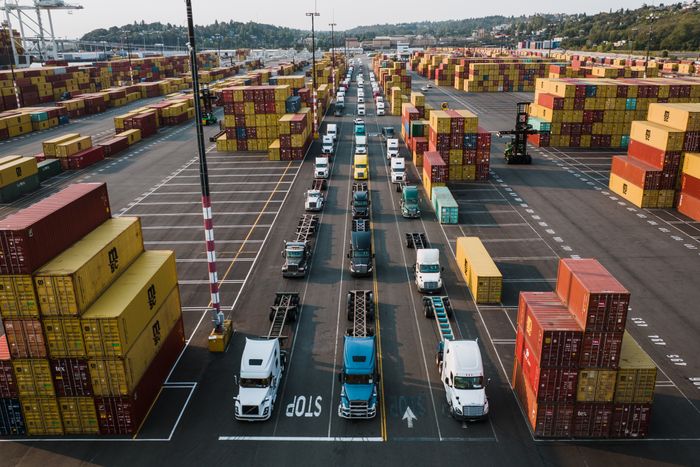
For many years, supply chain management was often viewed as a specialized discipline centered primarily within procurement, sourcing, and logistics functions. Procurement teams negotiated contracts, managed supplier relationships, monitored costs, and worked to ensure materials arrived when needed. Operations leaders certainly maintained an interest in supply chain performance, but responsibility for managing disruptions frequently remained concentrated within a relatively narrow segment of the organization.
That distinction has become increasingly difficult to maintain.
Over the past several years, organizations have experienced an unprecedented sequence of disruptions that exposed the interconnected nature of modern business operations. Geopolitical conflicts, labor shortages, transportation bottlenecks, shifting trade policies, inflationary pressures, severe weather events, and fluctuating consumer demand have demonstrated that supply chain performance influences nearly every aspect of organizational execution.
As a result, supply chain resilience is no longer simply a procurement concern. It has become a broader operational leadership responsibility that requires coordination across finance, operations, manufacturing, customer service, sales, technology, and executive management.
For chief operating officers and operations executives, the challenge is no longer limited to obtaining goods at favorable prices. The objective has expanded to ensuring the organization can continue operating effectively despite uncertainty.
The End of the Efficiency-Only Era
For decades, many organizations optimized their supply chains around efficiency metrics. Inventory levels were reduced. Supplier networks were consolidated. Manufacturing footprints were streamlined. Transportation routes were designed to minimize cost.
These approaches often produced measurable financial benefits. Lean inventory practices improved working capital performance. Strategic sourcing initiatives reduced procurement expenses. Global supplier networks provided access to lower-cost production capabilities.
However, the events of recent years revealed a significant tradeoff.
Supply chains optimized exclusively for efficiency often lacked sufficient flexibility when disruptions occurred. A supplier shutdown in one region could affect production schedules across multiple continents. Transportation delays could create inventory shortages despite strong demand forecasts. Labor disruptions at ports or distribution centers could affect customer service performance for weeks or months.
Many organizations discovered that highly efficient systems were not necessarily resilient systems.
Operations leaders increasingly recognize that resilience requires a broader perspective. Cost remains important, but it is now evaluated alongside continuity, adaptability, responsiveness, and risk exposure.
This evolution is reshaping how organizations approach operational planning.
Supply Chain Disruptions Have Become Enterprise-Wide Problems
One reason resilience has moved into the COO’s sphere of responsibility is that modern disruptions rarely remain isolated within procurement departments.
A supplier delay may initially appear to be a sourcing issue. In practice, its consequences extend much further.
Production schedules may require modification. Customer commitments may need adjustment. Financial forecasts may become less reliable. Inventory strategies may require revision. Sales teams may face challenges meeting demand. Customer service departments may encounter increased inquiries and complaints.
The operational effects often spread quickly throughout the organization.
As a result, successful responses require coordination among multiple functions rather than isolated action within procurement teams.
This reality has elevated the importance of cross-functional decision-making. Operations leaders increasingly serve as the connective tissue between departments, ensuring that information moves efficiently and that competing priorities remain aligned.
Organizations seeking to strengthen this capability often benefit from developing stronger frameworks for collaboration. The organizations that respond most effectively to disruptions are often those with established mechanisms for communication and decision-making long before a crisis occurs.
Visibility Has Become a Competitive Advantage
Another significant shift involves the growing importance of operational visibility.
Historically, many organizations managed supply chains through periodic reports and retrospective analysis. Information often arrived after issues had already developed.
Today’s operating environment requires a more dynamic approach.
Organizations increasingly seek real-time insight into supplier performance, inventory positions, production capacity, transportation status, customer demand patterns, and financial implications. Advances in enterprise technology have made this visibility more attainable, but technology alone is not sufficient.
Operations leaders must establish processes that transform information into action.
Visibility becomes valuable when organizations can identify emerging risks early enough to respond effectively. A delayed shipment may not create a crisis if alternative options are available and corrective action occurs quickly. The same delay can become far more costly when identified too late.
This emphasis on visibility is driving investment in integrated planning capabilities that connect operational, financial, and supply chain data.
Rather than managing individual functions independently, organizations are increasingly evaluating the broader operational picture.
Scenario Planning Is Moving Into the Mainstream
One of the most notable developments among leading operations organizations is the growing use of scenario planning.
In previous decades, many organizations developed annual operating plans and adjusted them periodically throughout the year. While that approach remains important, today’s environment often requires more frequent reassessment.
Supply chain conditions can change rapidly. Regulatory policies may shift with limited notice. Tariff structures can alter sourcing economics. Demand forecasts may fluctuate due to market conditions or competitive activity.
Under these circumstances, static planning approaches often prove insufficient.
Operations leaders are increasingly evaluating multiple scenarios simultaneously. They assess potential supplier disruptions, transportation constraints, labor challenges, demand fluctuations, and cost changes before problems occur.
This approach enables organizations to respond more rapidly when circumstances change.
Scenario planning also improves decision quality by encouraging leaders to consider alternative outcomes rather than relying exclusively on a single forecast.
The goal is not to predict every possible disruption. Such an objective would be unrealistic. Instead, organizations seek to improve preparedness by understanding how various conditions might affect operational performance.
Supplier Relationships Are Being Reconsidered
The concept of supplier diversification has received substantial attention in recent years, but the discussion extends beyond simply increasing the number of vendors.
Operations leaders are increasingly examining the strategic nature of supplier relationships.
Questions that once focused primarily on pricing now include broader considerations. How financially stable is the supplier? How concentrated is its manufacturing footprint? What contingency plans exist for operational disruptions? How effectively does the supplier communicate emerging risks?
These factors have become more important because disruptions often originate outside the direct control of either party.
Organizations that maintain strong supplier relationships frequently receive earlier visibility into challenges and gain greater flexibility when responding to unexpected events.
In many cases, resilience depends as much on collaboration as it does on contractual terms.
The most effective organizations increasingly view suppliers as strategic partners rather than purely transactional vendors.
Technology Is Changing How Risks Are Managed
Technology continues to play a significant role in improving supply chain resilience.
Artificial intelligence, predictive analytics, digital twins, advanced planning platforms, and integrated business systems are providing operations leaders with capabilities that were difficult to achieve only a few years ago.
These tools can identify patterns, evaluate risks, simulate alternative scenarios, and support faster decision-making.
However, technology should not be viewed as a substitute for operational discipline.
Organizations that achieve meaningful results typically combine technology investments with process improvements, governance frameworks, and organizational alignment.
Without those elements, even sophisticated systems may fail to produce meaningful business outcomes.
Operations leaders should therefore focus on how technology supports decision-making rather than viewing technology as the solution itself.
The objective is improved operational performance, not simply digital modernization.
Building a Resilient Operating Model
Supply chain resilience ultimately reflects a broader organizational capability.
It requires visibility into operations, alignment across functions, disciplined planning processes, strong supplier relationships, adaptable decision-making structures, and a willingness to balance efficiency with flexibility.
For chief operating officers, this responsibility increasingly extends beyond traditional operational metrics. It encompasses the organization’s ability to navigate uncertainty while continuing to serve customers, support growth objectives, and maintain financial performance.
The organizations that thrive in the coming years will not necessarily be those with the lowest costs or the most streamlined supply chains. They will be those capable of adapting effectively when conditions change.
That distinction is why supply chain resilience has become a central operations leadership issue. As disruption becomes a recurring feature of the business environment rather than an occasional exception, resilience itself is emerging as one of the most valuable operational capabilities an organization can develop.
Strengthening Supply Chain Resilience Through Operational Leadership
Supply chain challenges will continue to evolve as global markets, regulatory environments, and customer expectations change. While procurement teams remain essential contributors, responsibility for resilience increasingly rests with operations leadership because disruptions now affect the entire enterprise.
COOs who establish stronger visibility, encourage cross-functional collaboration, invest in planning capabilities, and cultivate adaptable operating models position their organizations to respond more effectively when uncertainty arises. In an environment where disruption has become commonplace, resilience is no longer simply a defensive measure. It has become a defining characteristic of operational excellence and a meaningful source of competitive advantage.

0 Comments